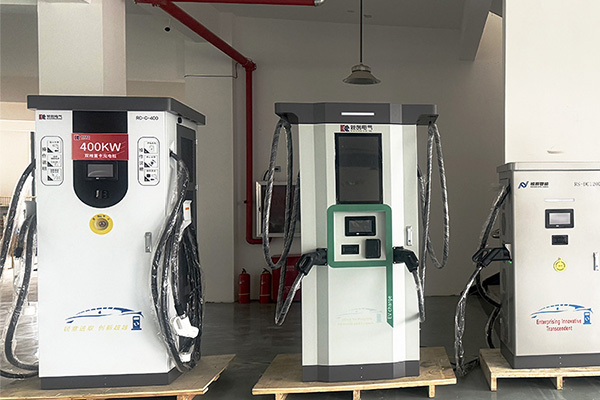
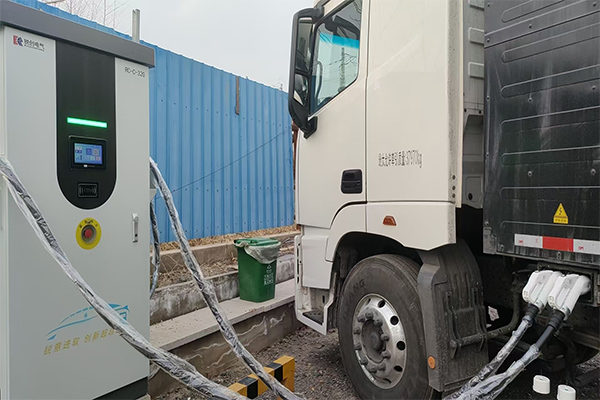
Electric trucks are becoming an important part of the commercial transportation industry.
From urban delivery vehicles to regional logistics and heavy-duty transportation, more fleet operators are looking at electric vehicles as an alternative to traditional diesel trucks.
However, charging an electric truck is different from charging a passenger car.
Commercial trucks usually have larger battery capacities, higher energy consumption, and more demanding daily operating schedules. For this reason, choosing the right EV charging equipment is an important part of fleet electrification.
In this article, we will discuss several key factors to consider when planning an EV charging system for heavy-duty electric trucks.
1. Charging Power and Daily Operating Schedule
Charging power is one of the first factors to consider.
Compared with passenger cars, heavy-duty electric trucks often have larger battery packs and require more energy to complete their daily routes.
A low-power charger may not provide enough energy during a short parking period.
For fleet operators, it is important to understand:
- The battery capacity of each truck.
- Daily driving distance.
- Energy consumption per kilometer.
- Available charging time.
- Number of trucks in the fleet.
- Expected charging frequency.
For example, trucks that return to a depot overnight may have a different charging requirement from vehicles that operate continuously and need charging during short breaks.
The charger power should match the vehicle's actual charging capability and the fleet's operating schedule.
2. Check the Vehicle Voltage Range
Heavy-duty electric trucks may use different battery voltage platforms.
Before selecting a DC fast charger, fleet operators should check the vehicle manufacturer's charging specifications.
Important information includes:
- Battery voltage range.
- Maximum DC charging voltage.
- Maximum charging current.
- Maximum charging power.
- Supported charging connector.
A charger with a suitable output voltage range can support a wider range of vehicles.
For example, some commercial DC chargers support a wide output voltage range, such as 150–1000V DC, depending on the model.
However, the actual charging voltage must always match the vehicle's requirements.
It is important to confirm compatibility before purchasing the charging equipment.
3. Consider High-Current Charging Requirements
High-power charging is not determined by power alone.
Voltage and current work together to determine charging power.
The basic relationship is:
Power (kW) = Voltage (V) × Current (A) ÷ 1000
For example, a charging system operating at 800V and 500A has a theoretical output power of 400kW.
This calculation helps explain why both voltage and current are important when selecting charging equipment.
For heavy-duty truck applications, buyers should check whether the charger can provide the required current under the vehicle's operating voltage.
They should also consider cable temperature, connector ratings, and the charger's cooling design.
4. Why Can Dual-Gun Charging Be Useful for Electric Trucks?
Some commercial charging projects need to serve multiple vehicles within a limited period.
A dual-gun DC charger provides two charging connectors, allowing two vehicles to connect to one charging unit.
For certain heavy-duty truck models, a dual-gun configuration may also be considered when the vehicle supports charging through two connectors.
However, this requires careful confirmation.
Buyers should check:
- Whether the vehicle supports dual-connector charging.
- Whether the charger supports the required charging mode.
- The maximum output current of each connector.
- Total available output power.
- Whether simultaneous charging is supported.
Not every dual-gun charger can combine the output of two connectors to charge one vehicle.
The charger and vehicle must both support the intended configuration.
5. Cable Length and Cable Management
Cable management is an important part of a truck charging project.
Heavy-duty trucks are larger than passenger cars, and their charging ports may be positioned differently.
A charging cable that is too short can make vehicle parking and charging difficult.
When planning the charging area, consider:
- Charging port position on the truck.
- Parking direction.
- Distance between the charger and vehicle.
- Cable length and weight.
- Space for vehicle movement.
- Cable protection and storage.
For high-power charging equipment, cable weight can also affect daily operation.
A suitable cable management system can help keep the charging area organized and reduce unnecessary cable contact with the ground.
6. Electrical Infrastructure and Site Planning
Installing high-power chargers requires careful electrical planning.
A fleet depot with several high-power chargers may need a substantial amount of grid capacity.
Before installation, the project team should evaluate:
Grid Capacity
Check whether the existing power supply can support the planned charging equipment.
Transformer Capacity
The transformer should be selected according to the total expected electrical load and project requirements.
Power Distribution
The electrical distribution system should be designed to support the required charging equipment safely.
Charging Layout
The layout should provide enough room for truck parking, turning, and charging operations.
Future Expansion
If the fleet is expected to grow, it may be useful to reserve space and electrical capacity for additional chargers.
For large fleet charging projects, professional electrical engineering support is recommended.
7. Smart Charging and Fleet Management
When a fleet has multiple electric trucks, charging management becomes increasingly important.
A charging management system can help operators monitor equipment and organize charging activities.
Depending on the system, useful functions may include:
- Real-time charger status.
- Charging session records.
- Remote monitoring.
- Charging schedule management.
- Fault notifications.
- Power management.
- OCPP communication.
Smart charging can help operators organize charging according to vehicle schedules and available electrical capacity.
For example, vehicles that need to leave early the next morning may be given charging priority.
The actual functions depend on the charger and management platform.
8. Choose a Suitable Charging Equipment Supplier
For heavy-duty truck charging projects, buyers should look beyond the rated power of a charging station.
A suitable supplier should be able to provide technical information and discuss the actual project requirements.
Before placing an order, it is useful to request:
- Product datasheets.
- Output voltage and current specifications.
- Charging connector details.
- Installation drawings.
- Communication protocol information.
- Factory testing information.
- Warranty and after-sales support details.
If the project has special requirements, the supplier should also confirm whether the equipment configuration can be adjusted.
Conclusion
Heavy-duty electric truck charging requires careful consideration of charging power, vehicle voltage, current, connector configuration, cable management, and site electrical capacity.
Choosing the right equipment starts with understanding the vehicles and their daily operating schedules.
At Henan Risen Intelligent Equipment Co., Ltd., we provide DC fast charging equipment and charging solutions for different commercial applications, including high-power charging requirements.
If you are planning a heavy-duty electric truck charging project or looking for a high-power DC charger supplier, please contact our team.
We would be glad to learn more about your vehicles, charging requirements, and project plans.
Email: info@risencharger.com
Website: https://risencharger.com/