Installing a DC EV charging station involves more than purchasing charging equipment. The total project cost also depends on electrical infrastructure, installation conditions, charging requirements, and local regulations.
For charging station investors, commercial property owners, fleet operators, and charging network developers, understanding these cost factors is essential before making an investment decision.
In this guide, we explain the main expenses involved in installing a DC EV charging station, how project requirements affect the budget, and what information you should prepare before requesting a quotation from a charger manufacturer.
1. DC EV Charger Power Rating and Configuration
The charging equipment is one of the main cost components of a DC EV charging station. Its price depends on rated power, output voltage and current, charging connectors, cabinet design, and optional functions.
Different projects require different charging configurations.
| DC Charger Power | Typical Applications | Key Considerations |
|---|---|---|
| 30–60 kW | Small commercial sites, selected fleet applications | Moderate power requirements and longer charging periods |
| 80–120 kW | Commercial parking facilities and public charging stations | Balance between charging speed and infrastructure requirements |
| 150–240 kW | High-utilization charging sites and commercial fleets | Higher power demand and electrical infrastructure requirements |
| 300–400 kW and above | High-throughput charging sites and compatible heavy-duty vehicles | Vehicle compatibility, grid capacity, and site design become particularly important |
These ranges are general examples, not fixed application limits. The appropriate power rating depends on the vehicles being charged, daily energy demand, available charging time, and site conditions.
Higher-power chargers generally require greater equipment investment and may increase electrical infrastructure costs. However, the most powerful charger is not necessarily the most economical choice for every project.
When comparing quotations, check whether the quoted price includes the same configuration, number of charging connectors, output specifications, communication functions, and optional accessories.
2. Electrical Infrastructure and Grid Capacity
Electrical infrastructure can significantly affect the total cost of a DC charging station installation.
Before purchasing equipment, determine whether the existing electrical supply can support the planned charging load.
Important considerations include:
- Available grid connection and transformer capacity
- Transformer upgrades, if required
- Main distribution cabinets and circuit protection
- Power cables, cable trays, and grounding systems
- Electrical installation and commissioning
- Local utility connection requirements
For example, a site with sufficient existing electrical capacity may require relatively limited infrastructure work. A site that needs a new transformer, an upgraded utility connection, or extensive cable installation may involve substantially higher costs.
It is also important to distinguish charger output power from electrical input demand. Conversion losses and auxiliary consumption mean that the grid must supply more power than the useful DC output delivered to vehicles.
For multi-charger installations, the total rated power of all chargers is not always equal to the actual simultaneous demand. Load management can help distribute available power across chargers when the equipment supports this function and the charging schedule allows it.
Practical tip: Assess available site power before finalizing the charger quantity and power rating. This can help identify infrastructure constraints early and reduce unexpected project expenses.
3. Site Preparation and Installation Costs
The physical conditions of the installation site also influence the project budget.
Depending on the location, site preparation may involve:
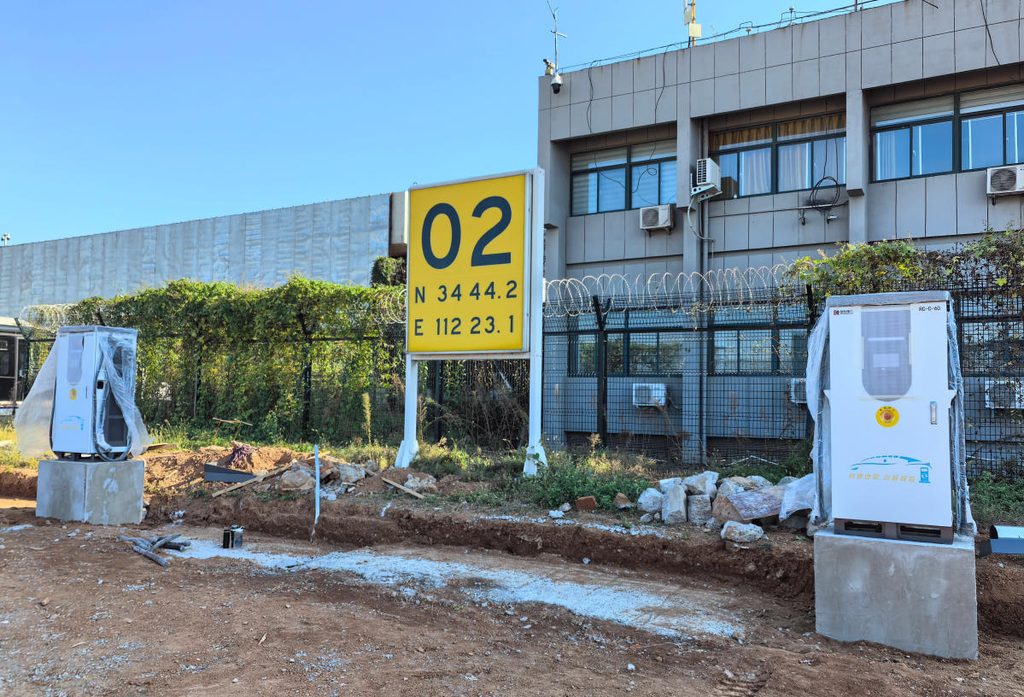
- Concrete foundations or mounting bases
- Parking space modifications
- Trenching and underground cable installation
- Cable routing and protective structures
- Weather protection and lighting
- Traffic management and vehicle access arrangements
- Labor, lifting equipment, and installation services
A straightforward installation at an existing commercial facility may require relatively little civil work. A new charging station built on an undeveloped site may require considerably more preparation.
The location of the charging equipment also matters. Long distances between the electrical supply, charger cabinets, and parking spaces can increase cable requirements and installation labor.
For outdoor installations, consider local temperature conditions, rainfall, dust exposure, drainage, and the equipment's specified environmental protection rating.
Installation costs vary by country, contractor, site conditions, and local regulations. For this reason, they should be assessed separately from the manufacturer's equipment quotation.
4. Number of Chargers and Charging Connectors
The number of chargers required affects both the initial investment and the supporting infrastructure.
A small commercial site may begin with one or two DC chargers, while a busy public charging station or logistics depot may require multiple units.
However, the number of vehicles a site can serve depends on more than the number of connectors. Charging duration, vehicle arrival patterns, dwell time, and simultaneous power availability also matter.
When planning a multi-charger site, consider:
- Expected daily charging sessions
- Peak-hour demand
- Average energy required per vehicle
- Required vehicle turnaround time
- Future expansion plans
- Available grid capacity
For example, a fleet depot where vehicles return at similar times may experience concentrated demand in the evening. A public charging site may experience more variable demand throughout the day.
The charging layout and equipment configuration should reflect the site's actual operating requirements.
Where supported, dynamic power allocation can distribute available charging power among connected vehicles. This may help manage limited electrical capacity, but it does not eliminate the need for appropriate infrastructure planning.
5. Charging Connectors, Software, and Optional Features
The basic charger price may not include every function required for a specific project.
Depending on the target market and business model, additional requirements may include:
Charging connectors and cables
Confirm the connector standard required by local vehicles, cable length, current rating, and any special cable management requirements.
Charging management and communication
Commercial operators may require OCPP compatibility, remote monitoring, user authorization, payment integration, or connection to an existing charging management platform. Confirm protocol versions and software compatibility before ordering.
Dual-gun configurations
A charger with two connectors may offer greater flexibility. However, verify whether both connectors can charge vehicles simultaneously and how available power is allocated between them.
Payment and user access
Public charging stations may require RFID readers, payment terminals, or other access-control functions, depending on the intended operating model and local requirements.
Remote monitoring and maintenance
Remote diagnostics and monitoring may help operators identify faults and manage equipment performance. Available functions depend on the charger and its software configuration.
Not every project needs every option. Selecting only the functions required for the intended application can help control the initial investment.
6. Permits, Certification, and Local Compliance
Regulatory requirements differ between countries and regions.
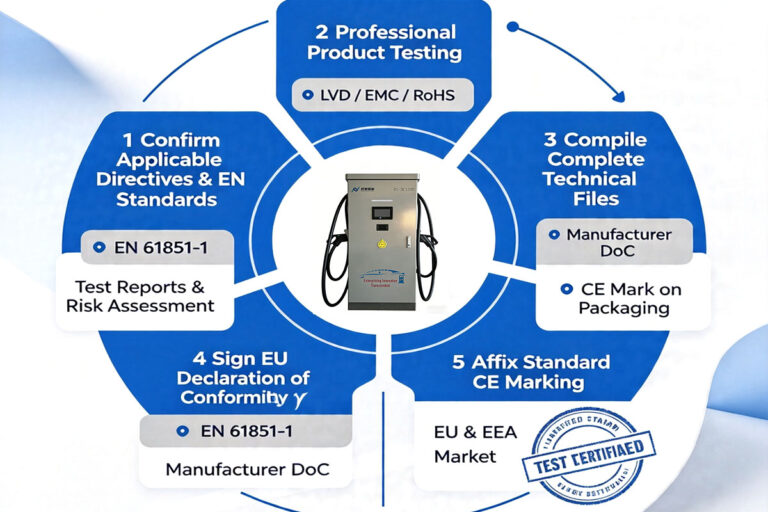
Depending on the project, additional costs may arise from electrical inspections, construction permits, utility approvals, local certification requirements, and compliance with applicable installation standards.
Equipment certification should also be checked against the target market and the exact product configuration.
Before placing an order, confirm:
- Which product certifications are required
- Which connector and communication standards apply
- Whether local utility approval is necessary
- Which installation inspections are required
- Who is responsible for permitting and commissioning
These requirements should be clarified early, particularly for projects involving imported charging equipment.
Working with a charger manufacturer that can provide the relevant technical documentation and product information can make the equipment evaluation process more straightforward.
7. Operation, Maintenance, and Long-Term Costs
The initial installation cost is only one part of the total investment.
Over the operating life of a charging station, owners may also need to budget for:
- Electricity consumption and applicable demand charges
- Network connectivity and charging management software
- Routine inspection and preventive maintenance
- Spare parts and repairs
- Technical support
- Insurance and site-related operating expenses
Electricity tariffs and demand charges vary by utility and location. For sites with multiple high-power chargers, the local electricity tariff structure may have a meaningful impact on operating economics.
Reliability is another important consideration. Equipment downtime can reduce charging availability and affect customer experience or fleet operations.
When comparing manufacturers, consider product specifications, quality control, warranty terms, technical documentation, and the availability of after-sales support alongside the initial equipment price.
A lower purchase price does not automatically mean a lower total cost of ownership.
8. How to Estimate Your DC Charging Station Budget
A practical first step is to divide the project budget into separate cost categories.
| Cost Category | What to Include |
|---|---|
| Charging equipment | DC chargers, connectors, cables, and selected options |
| Electrical infrastructure | Transformer upgrades, distribution equipment, and cabling |
| Civil works | Foundations, trenching, paving, and site preparation |
| Installation and commissioning | Labor, electrical work, testing, and startup |
| Permits and compliance | Applicable approvals, inspections, and certification-related costs |
| Software and connectivity | Charging management, networking, and payment integration where required |
| Ongoing operations | Electricity, maintenance, repairs, and technical support |
The actual cost of each category depends on the project location, site conditions, and selected equipment. A reliable estimate should be based on a defined scope rather than a generic price per charger.
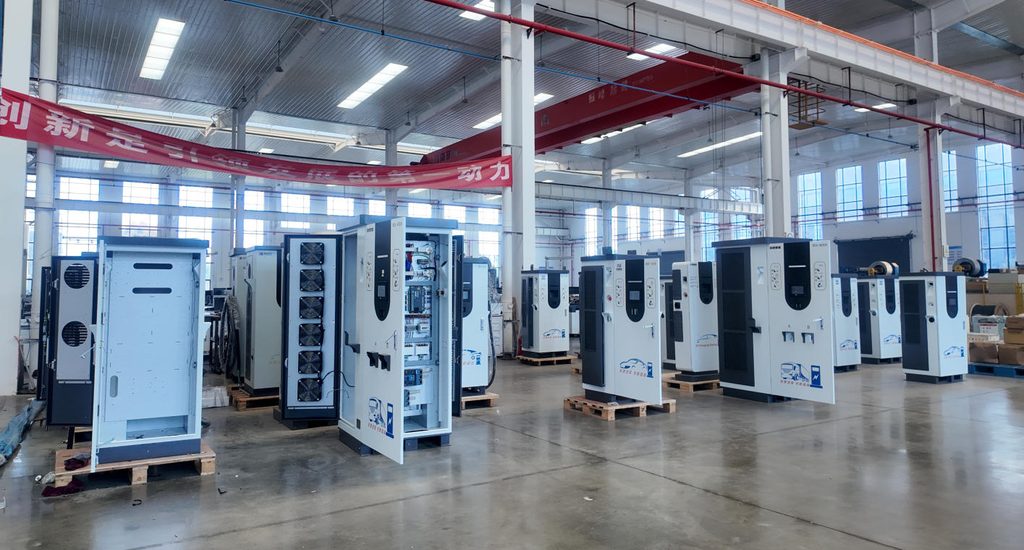
For an initial equipment quotation, a charger manufacturer can usually evaluate the equipment requirements using basic project information. A complete installation budget may additionally require a site survey, an electrical assessment, and quotations from local contractors.
9. What Information Do You Need to Request a DC EV Charger Quotation?
To help a manufacturer recommend suitable equipment and prepare an accurate quotation, provide as much of the following information as possible:
1. Project location
Which country will the chargers be installed in? This helps identify relevant connector standards, electrical requirements, and market-specific considerations.
2. Application
Is the project for a public charging station, commercial parking facility, logistics depot, bus fleet, or heavy-duty truck charging site?
3. Required charging power
Do you have a preferred power rating, such as 60 kW, 120 kW, 180 kW, or 400 kW? If not, describe your vehicles and charging requirements.
4. Quantity
How many chargers do you need for the initial installation? Are you planning to expand the site later?
5. Vehicle and connector requirements
What vehicles will use the chargers? If available, provide the battery voltage range, maximum DC charging power, connector type, and charging communication requirements.
6. Available electrical capacity
Do you know the site's available power supply or transformer capacity? If not, this can be assessed during project planning.
7. Required functions
Do you need dual connectors, dynamic power allocation, OCPP compatibility, RFID authorization, payment functions, or remote monitoring?
You do not need to have every detail finalized before contacting a manufacturer. Providing the country, application, estimated quantity, and target power is a useful starting point.
10. Find the Right DC Charging Solution for Your Project
The cost of installing a DC EV charging station depends on the complete project, not just the charger's rated power.
By evaluating equipment specifications, electrical infrastructure, site conditions, operating requirements, and local regulations together, project owners can make better-informed investment decisions.
At Risen, we provide AC and DC EV charging equipment for commercial charging applications. Our team can help you evaluate suitable charger configurations based on your required power, vehicle compatibility, project location, and application.
Whether you are planning a small commercial installation, a public charging station, or a high-power fleet charging project, we welcome the opportunity to discuss your requirements.
Contact Risen to request a DC EV charger quotation.
Share your project location, required power, estimated quantity, and application with our team to start the equipment selection process.